Chapter Ten — Place & Time
The Coffee Year: Seasons in a Mountain Town
A mountain café's year runs in five seasons, not four. How ski season, mud season, summer, harvest light and the holidays reshape what is brewed, baked and open.
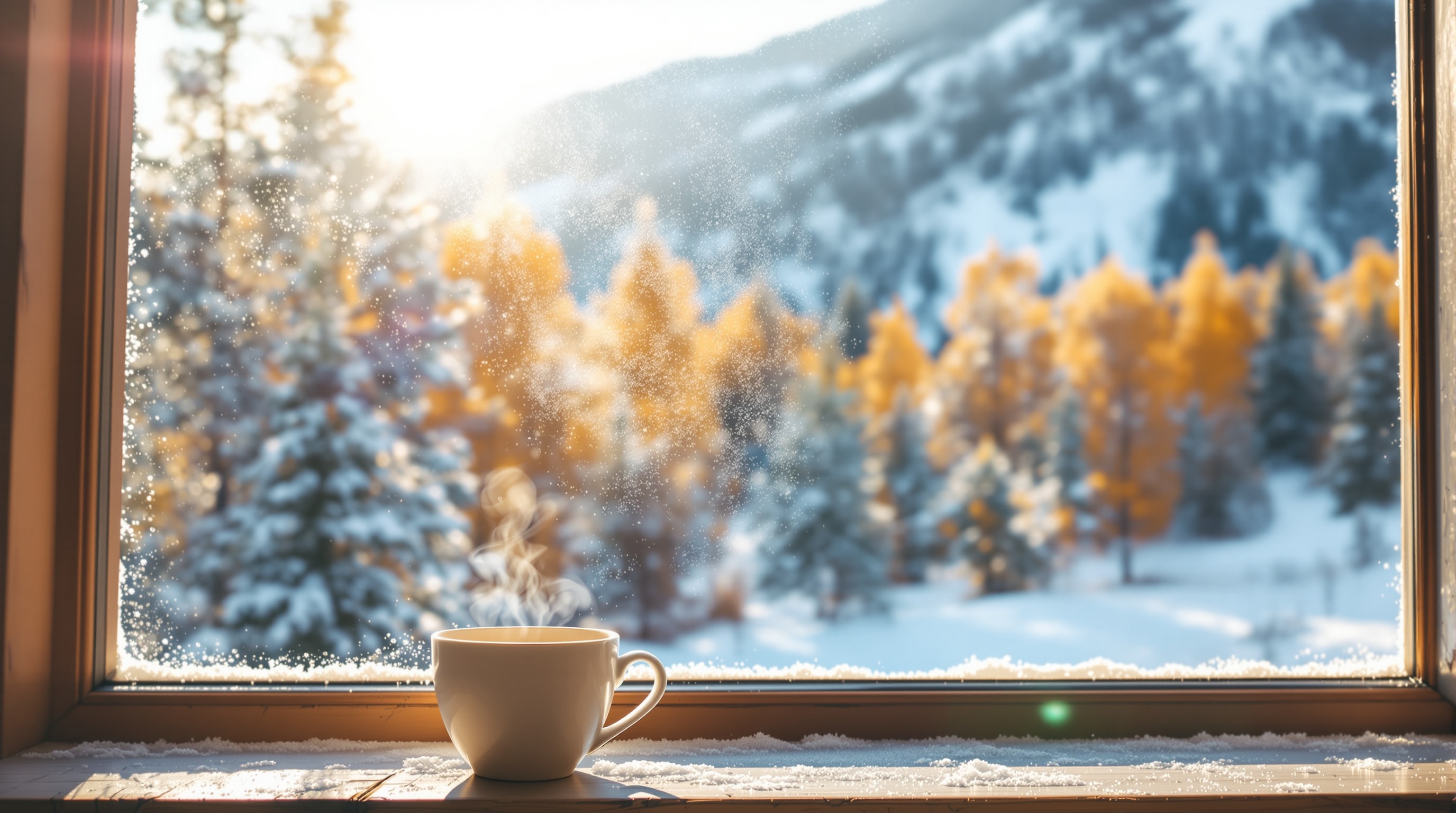
A resort valley does not have four seasons. It has five, and they are defined by the lift schedule and the highway rather than by the equinox. Anyone planning a visit, or wondering why a place that was heaving in February is dark in May, is really asking about this calendar.
Deep Winter: December to Early April
The busiest and strangest part of the year. The valley's population multiplies, the working day starts in the dark and ends in the dark, and the coffee house operates at a pitch it sustains for four months.
What changes behind the counter: volume roughly doubles or triples. Drinks get larger, sweeter and denser — mochas, breves, whole milk over alternatives, and a great deal of hot chocolate. Sizes shift up. The takeaway share rises sharply because a large fraction of the room is heading straight to a lift.
What changes in front of it: two distinct populations share the space. Locals arrive before dawn and are gone by eight; visitors arrive between eight and ten and stay. The two groups barely overlap, and the room feels like two different cafés on either side of the same morning.
The powder-day effect: a heavy overnight snowfall rewrites the day. The pre-lift rush becomes frantic, then the town empties completely by mid-morning and stays empty. Cafés know this and staff for it.
Mud Season, Spring: Mid-April to Late May
The mountain closes, the visitors leave, the snow goes rotten and the whole valley exhales. This is the quietest six weeks of the year and the least understood by outsiders.
Businesses close for one to three weeks — not because they are failing but because it is the only window in which staff can take a holiday and owners can do maintenance. Hours contract. Some kitchens shut entirely. If you are visiting in May, assume nothing and check everything — a point we make again in Locations & Hours.
For the cafés that stay open it is the best coffee of the year. The room is quiet, the staff are unhurried, new drinks get tested and the drip is brewed in small batches for people who will actually taste it.
Summer: June to Mid-September
The second high season, and in Idaho an increasingly serious one. Hikers, cyclists, anglers, climbers, festival visitors and an enormous influx of people escaping the heat of the Snake River Plain.
What changes: iced everything. Cold brew, iced americanos, iced condensed-milk coffee, smoothies. The morning rush arrives even earlier than in winter, because summer starts are dictated by afternoon thunderstorm risk — the regional National Weather Service forecast is the document that actually sets the pace of a summer morning. Trailhead traffic means a huge takeaway share again, and outdoor seating doubles the effective size of every café in the valley.
Wildfire smoke is now a routine part of late summer in central Idaho. Smoke days empty patios and push everybody indoors, and the AirNow air quality index has become as much a part of the daily check as the weather.
Harvest Light: Mid-September to Late October
The connoisseur's season and, for many residents, the best six weeks of the year. Cold clear mornings, warm afternoons, cottonwoods turning gold along the river, and hardly anyone about.
What changes: the swing back to hot drinks is abrupt — often a single cold morning. Spiced and seasonal drinks appear. The bakery case turns to pumpkin, apple and squash, because this is the one moment when regional produce is genuinely abundant. Weekday mornings are quiet and weekends are busy with hunters, leaf-lookers and people making a last visit before the passes get difficult.
Then a second, shorter mud season arrives in late October and early November: the aspens are down, the mountain has not opened, and the valley goes quiet again while everyone waits for snow.
The Holidays: Late November to Early January
Not really part of winter — a season of its own, and the single most intense period of the year. The valley's population peaks, the week between Christmas and New Year is the busiest of all twelve months, and every café in the region is running at capacity with a partly seasonal staff.
Queues are long, patience is short, and the best advice for a visitor is simple: go early, order simply, tip well, and do not be the person ordering six modified drinks at nine in the morning on the 28th of December.
The Fifth Season: Smoke
The four-season framing above is the traditional one, and for most of the valley’s history it was enough. In recent decades a fifth pattern has pushed its way into the calendar: late-summer wildfire smoke, which can settle into a mountain valley and stay for days at a time regardless of what the weather is doing overhead.
Its effect on a coffee house is immediate and easy to read. Patio trade collapses. The room fills instead, and stays full through the middle of the day rather than emptying at nine the way a clear August morning does. Iced-drink orders fall away with the sunshine that usually drives them. Staff who commute in from the far end of the valley arrive later. None of it is catastrophic for a business, but it scrambles a week’s worth of planning, and any counter that has been open more than a few summers now watches the air-quality readings the way it once watched only the snow report.
What the Cycle Does to a Business
Two high seasons and two dead ones is a difficult shape to run a business on. It produces the traits that define mountain-town coffee:
- Cash-flow whiplash. A café earns a very large share of its annual revenue in about twenty weeks and must carry itself through the rest.
- A staffing cliff. Winter needs two or three times the summer headcount, which means seasonal hiring, seasonal housing and constant training.
- Menu compression in the quiet months. A short board in May is a rational response to low volume, not a decline.
- Total dependence on locals. Regulars are the reason a café survives the shoulder seasons, which is why every good mountain coffee house treats them as the actual customer and visitors as welcome guests.
Understanding that cycle is the single most useful thing a visitor can bring with them. It explains the hours, the queues, the closures and the warmth of the reception in equal measure.