Chapter Six — Craft
The Mexican-Chocolate Mocha
Stone-ground Mexican chocolate, espresso and steamed milk — how the mountain West's defining cold-morning coffee drink is built, why it is grainy, and how to make it at home.
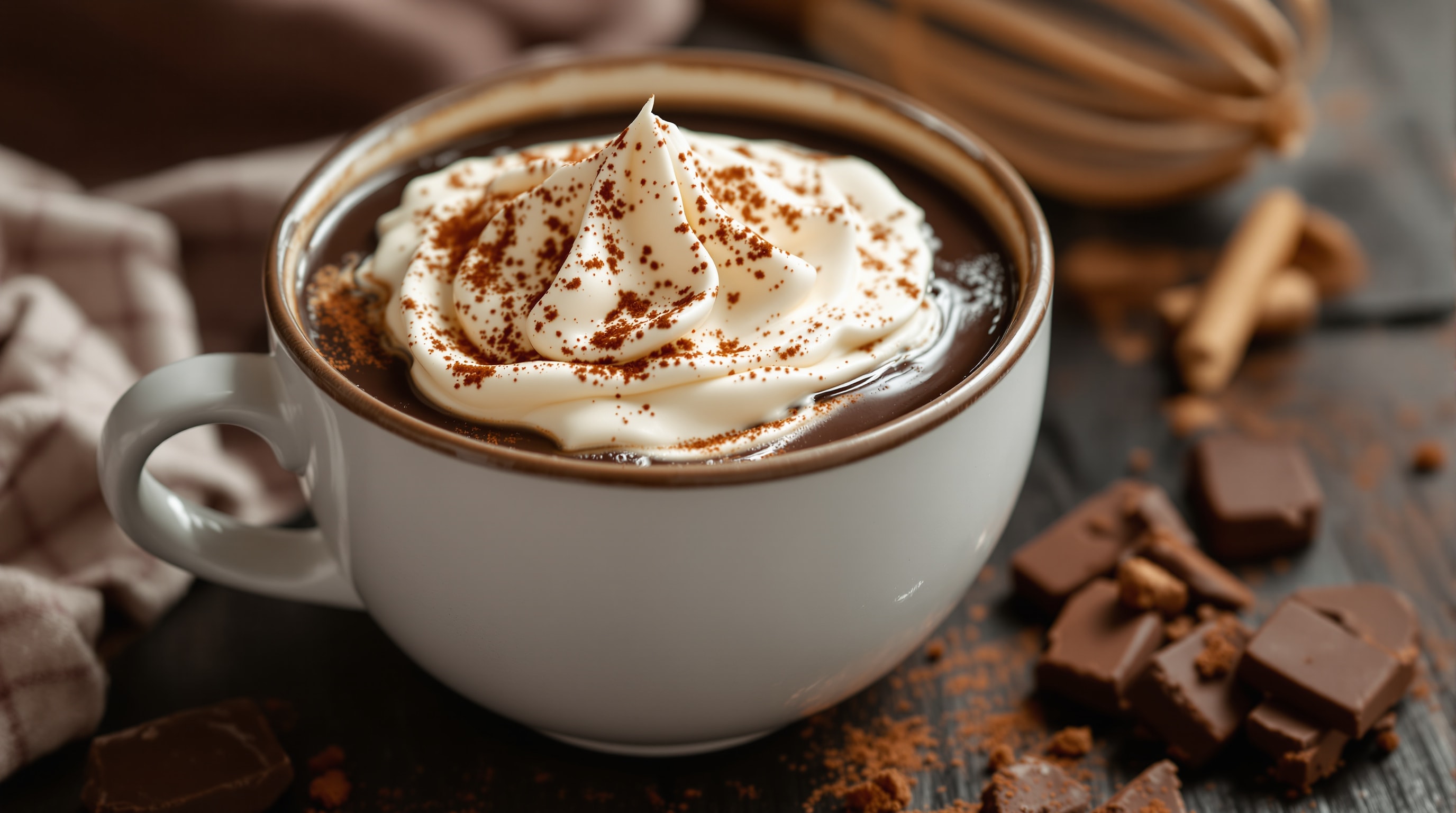
If one drink explains coffee in the mountain West, it is the mocha built on stone-ground Mexican chocolate rather than syrup. It is sweeter, spicier, grainier and far more filling than the mocha most people know, it is usually served in a wide bowl-shaped mug rather than a tall glass, and on a January morning at 6,000 feet it does something that a latte simply does not. This page explains the drink as a craft form. It is not a menu item and not anyone's recipe.
What Makes the Chocolate Different
Mexican drinking chocolate is not a manufactured couverture. It is a coarse, stone-ground tablet or disc of roasted cacao, cane sugar and cinnamon, sometimes with almond, vanilla or a trace of chilli. Crucially, it is ground to a deliberately gritty particle size and is not conched — the long refining step that gives European eating chocolate its glassy smoothness is skipped entirely.
That decision is the whole drink. The sugar crystals and cacao particles stay large, so the finished mocha has a faintly sandy texture on the tongue that people either love immediately or need one cup to accept. It also means the chocolate carries far more roasted, slightly rustic cacao character, and a cinnamon note that runs through the whole cup rather than sitting on top as a garnish.
Cacao itself has a long documented history as a spiced, foamed drink in Mesoamerica, prepared with chilli, vanilla and flowers and whipped to a head with a wooden stirrer long before it was ever sweetened for European tastes. The Encyclopaedia Britannica's account of chocolate is a solid short history, and the botanical and agricultural background is well covered by the United States Department of Agriculture's research services.
How the Drink Is Built
Cafés that take this seriously buy the tablets whole and grind them in house, usually daily, for the same reason they grind coffee to order: the aromatics in a ground spice-and-cacao mix fade fast. A shop that grinds its own chocolate is making a real commitment of labour to one drink.
The standard build has four steps:
- Ground chocolate in the cup. A generous measure of the freshly ground tablet goes into the mug dry.
- Espresso over it. Hot espresso is pulled directly onto the chocolate, and the heat plus the acidity begins to dissolve the sugar and bloom the cinnamon. This order matters — chocolate added to a finished latte never fully integrates.
- Steamed milk, poured hard. The pour has to be vigorous enough to keep the heavier cacao solids in suspension rather than letting them settle.
- Real whipped cream and a dust of cinnamon. Whipped to soft peaks from cold heavy cream, not from a pressurised can. It should sit on the surface and slowly collapse into the drink rather than floating like foam.
The wide bowl mug is not an affectation either. A broad, shallow vessel cools faster to a drinkable temperature, gives the whipped cream room to sit, and is easier to hold in both hands — which is what you want when your hands are cold.
Why It Works at Altitude
Three things line up.
Energy density. Whole milk, cane sugar, cacao butter and cream in one cup is a serious quantity of usable calories. In a place where the customer is about to spend the day in the cold, that is a feature.
Temperature retention. The suspended solids give the drink more thermal mass than a plain latte, so it stays warm longer in a cold room with a door opening every ninety seconds.
Flavour that survives a blunted palate. Dehydration at altitude reduces the sensitivity of the palate, and dry air reduces what the nose picks up. A delicate single-origin espresso loses much of its detail. Cinnamon, roasted cacao and real sweetness do not — they cut through. This is the same logic that leads mountain kitchens to season a little harder than sea-level ones.
Making a Good One at Home
You do not need an espresso machine, although it helps. What you do need is the right chocolate: look for a stone-ground tablet or disc from a Mexican grocery, one where the ingredient list is essentially cacao, sugar and cinnamon.
- Chop or grate it fine. Whole tablets do not dissolve reliably. A box grater or a few pulses in a spice grinder is enough.
- Bloom it in something hot and small. Two ounces of very strong coffee, an espresso shot, or a splash of near-boiling water. Stir until it is a smooth paste before any milk goes near it.
- Heat the milk to about 150°F, not to a boil. Above roughly 160°F milk proteins begin to taste scalded, and at altitude the milk gets there faster than you expect.
- Whisk hard, or froth. A traditional wooden molinillo spun between the palms is the historically correct tool and genuinely works; a small electric frother is the modern equivalent.
- Whip real cream with a few drops of vanilla and no sugar. The drink is sweet enough already.
The most common home failure is a thin, gritty, faintly bitter cup, and it almost always comes from adding cold milk to unbloomed chocolate. Dissolve first, dilute second.
Where It Sits in the Wider Board
This style is the anchor of the hot-chocolate shelf described in our field guide to the board, and it has close relatives: the same chocolate without espresso is simply Mexican hot chocolate, a drink in its own right and the standard order for anyone in the room under twelve. Add a very large quantity of espresso and you get the deliberately excessive version that most mountain boards carry under some local nickname.
For what the espresso underneath it should taste like, and how roast level changes the balance against the chocolate, see Roasts & Origins. A darker, lower-acid roast generally holds up better against cinnamon and cacao than a bright, fruit-forward light roast — which is one of the few places where the mountain West's traditional preference for darker coffee is straightforwardly correct rather than merely habitual.