Chapter Eight — Sourcing
Roasts, Origins and Trade Models, Decoded
What roast levels actually mean, how origin shapes flavour, and what fair trade, direct trade and relationship coffee genuinely commit a buyer to — without the marketing language.
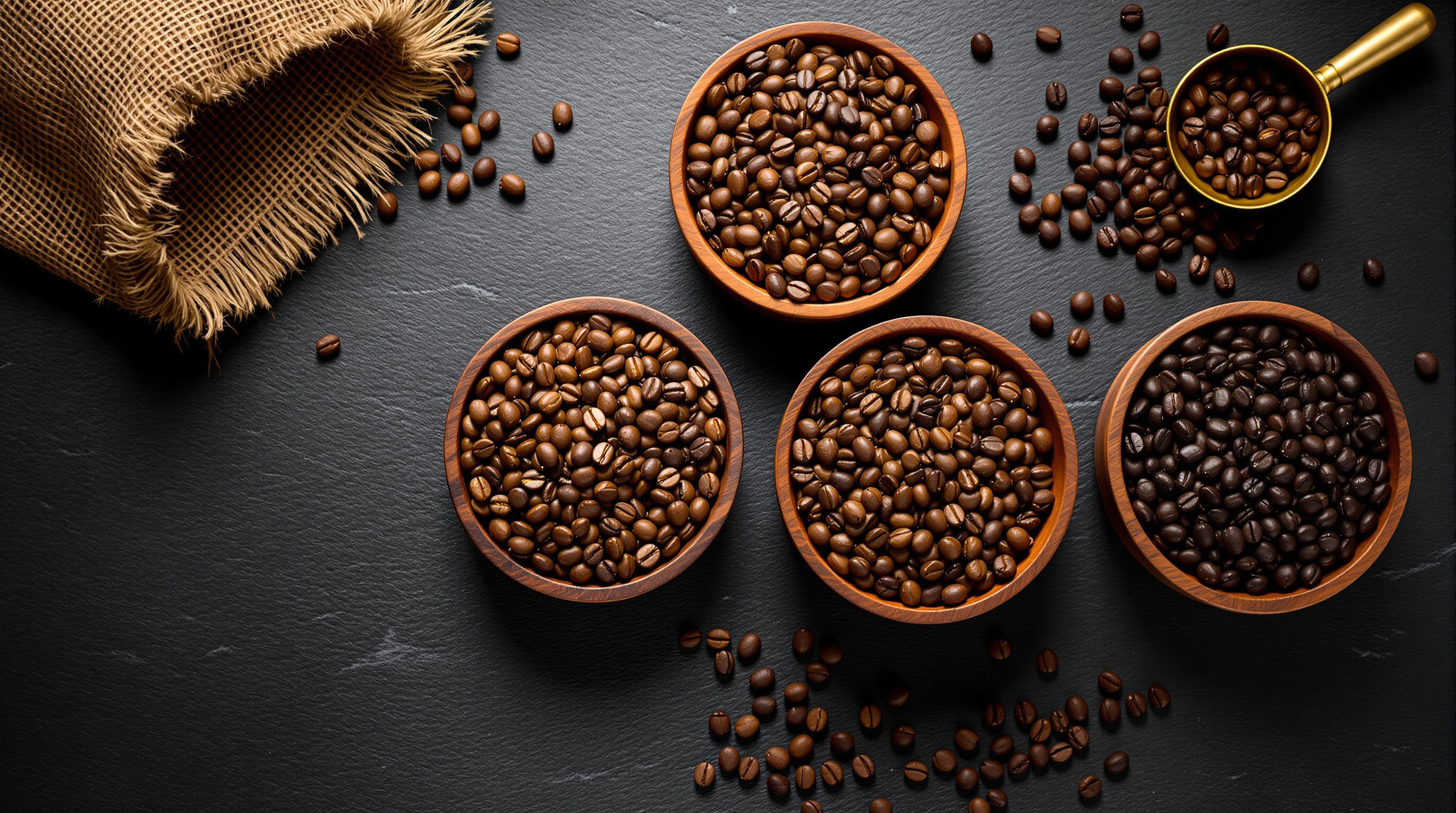
The bag on the shelf behind the counter carries perhaps six pieces of information, and at least three of them are usually misunderstood. This page translates the vocabulary: what a roast level is actually describing, what an origin does and does not tell you, and what the various trade labels genuinely commit anybody to.
Roast Level Is a Chemistry Timeline
Roasting drives a set of reactions inside the bean — principally Maillard browning and caramelisation, plus the physical event roasters call first crack, when trapped steam and carbon dioxide fracture the bean's structure audibly. Where the roaster stops relative to that event defines the roast.
Light
Stopped shortly after first crack. Retains the most acidity and the most of what the coffee's origin actually tastes like — the floral, citric, berry and tea-like notes that come from the variety, the soil and the processing. Also the least forgiving: light roasts are dense, harder to extract, and unkind to imprecise brewing.
Medium
Taken further, past the aromatic peak into caramelisation. Balanced, sweeter, rounder; origin character still legible but softened. The commercial centre of gravity for good specialty coffee, and the safest default.
Dark
Approaching or into second crack, where cell walls break down and oils migrate to the surface. Acidity is largely gone, replaced by roast-derived bitterness, body and smoke. Origin character is mostly overwritten — at this level you are tasting the roast, not the farm.
Two things follow that surprise people. First, dark roast has slightly less caffeine by weight, not more: caffeine is fairly heat-stable but the bean loses mass, so a scoop of dark beans holds fewer beans. Second, dark is not automatically worse. Against cinnamon, cacao and a lot of milk — as in the Mexican-chocolate mocha — a delicate light roast simply disappears. The mountain West's long preference for darker coffee is partly habit and partly a rational response to a blunted high-altitude palate.
Origin Tells You Less Than the Label Implies
A country name is a weak signal. Ethiopia spans enormous variation; Colombia produces everything from bright and floral to heavy and chocolatey. What actually predicts flavour is a stack of narrower facts, and the more of them a bag lists, the more someone was paying attention:
- Region or cooperative — substantially more informative than the country.
- Altitude of the farm — higher-grown coffee matures more slowly, developing more sugar and more acidity. Coffee grown above about 1,500 metres is denser and generally more complex. (A pleasing coincidence: mountain-town drinkers are usually drinking mountain-grown coffee.)
- Variety — Bourbon, Typica, Gesha, Caturra and the rest differ as much as wine grapes do.
- Processing method — arguably the biggest single flavour lever. Washed coffee is clean and acidic; natural (dry-processed) coffee is fruity, heavy and sometimes fermented-tasting; honey and anaerobic processes sit in between and can be dramatic.
- Harvest date — coffee is a crop. A bag with a recent harvest year on it is a good sign.
The International Coffee Organization publishes the production and trade statistics that sit behind all of this, and the National Coffee Association's origin overview is a reasonable non-commercial primer.
Trade Labels, and What They Actually Bind
This is where marketing language does the most work, so it is worth being precise.
Certified fair trade
A third-party certification with an audited standard. Its core mechanism is a minimum price floor plus an additional community premium paid to a democratically organised producer cooperative, along with environmental and labour criteria. Its strengths are that it is externally verified and that the floor genuinely protects farmers when the commodity market collapses. Its limits are equally real: certification costs money, it generally requires cooperative membership so it excludes many independent smallholders, and the floor price can sit below the cost of production in a high-cost origin. Details are published by Fair Trade Certified.
Direct trade
Not a certification at all — an unregulated description meaning a roaster buys from a farm or cooperative without the usual chain of intermediaries. At its best it means higher prices, long relationships and detailed quality feedback flowing back to the farm. At its worst it means nothing whatsoever, because nobody audits the claim. Judge it by specificity: a roaster who names the farm, the year and the price paid is telling you something. One who just prints the words is not.
Relationship coffee
The term most common among the roasters that supply mountain-town cafés, and the most demanding of the three when taken seriously. It describes multi-year commitments to specific producers — buying the same lots year after year, paying a negotiated premium above both the commodity price and the fair-trade floor, and often pre-financing the harvest so the farmer is not borrowing against it. There is no certificate. The evidence is continuity: the same names on the bag season after season.
Organic and shade-grown
Organic is an audited agricultural certification and means what it says. Shade-grown is not a single certification and is worth checking — the meaningful versions overlap with bird-habitat certifications backed by ecological research, and the Smithsonian Migratory Bird Center's bird-friendly programme is the most rigorous of them.
Decaffeinated Coffee, Briefly
Decaf deserves better than the sneer it usually gets, and the processing is genuinely interesting. Caffeine is removed from green beans before roasting, always with water as the carrier and then one of three agents to pull the caffeine out of the water: a solvent such as ethyl acetate or methylene chloride, activated carbon in the Swiss Water process, or pressurised carbon dioxide. None of them leaves a meaningfully caffeinated bean, and none of them leaves the solvent behind either — roasting at well over 400°F sees to that.
What they do cost is a little structure. Decaffeination strips some of the precursors that build sweetness and body during roasting, which is why a decaf often tastes flatter than its caffeinated twin from the same lot. A good roaster compensates by choosing denser, higher-grown lots for decaf and roasting them slightly differently. Also worth knowing: decaf is not caffeine-free. Residual caffeine is small but real, typically a couple of per cent of the original.
Freshness, the Variable Everyone Ignores
All of the above is defeated by stale coffee. Whole beans are good for roughly two to five weeks after roasting; ground coffee begins losing aromatics within minutes. Look for a roast date on the bag, not a best-before date — a best-before date is a shelf-life statement, and its presence in place of a roast date is itself informative.
At altitude the degassing runs faster, so the useful window is compressed at both ends: coffee needs a shorter rest after roasting and goes flat sooner afterwards. Buy smaller quantities more often. Store in something opaque and airtight at room temperature — not in the refrigerator, where coffee absorbs odours and picks up condensation every time the container is opened.
For what to do with the beans once you have chosen well, see Brewing at Altitude.