Chapter Five — Place & Time
Locations & Hours: The Rhythm of a Mountain Coffee Town
An independent orientation to Idaho's Wood River Valley coffee geography — the towns, the elevations, and why mountain-town opening times work the way they do.
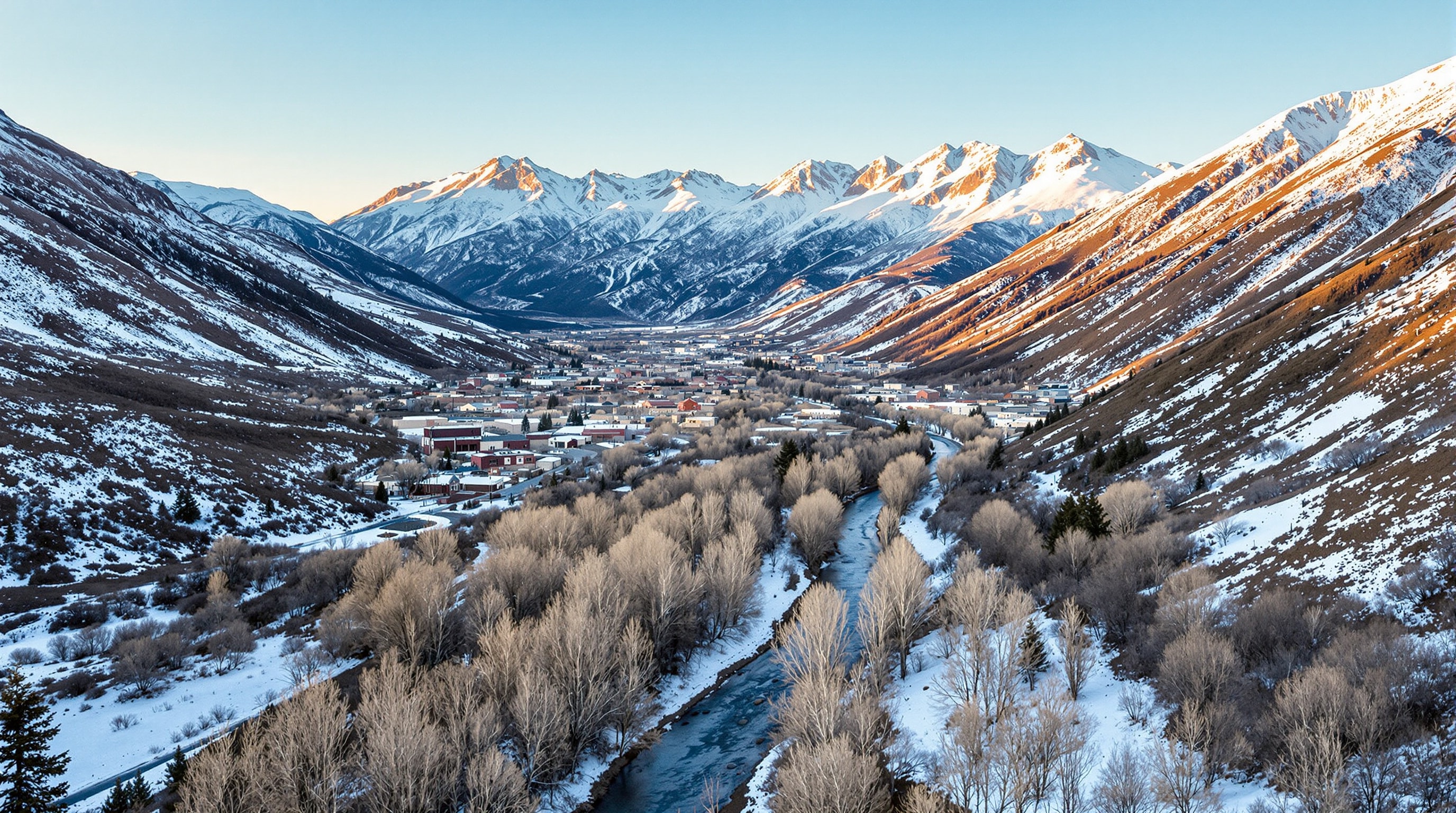
This page is an orientation, not a directory. It explains the geography of coffee in central Idaho — which towns sit where, at what elevation, and how the day is shaped in each — so that a visitor can plan sensibly. It lists no businesses and no opening times, and nothing here should be read as the hours of any establishment. Always check directly with wherever you intend to go.
The Valley, North to South
The Wood River Valley is a single north-south corridor about thirty miles long, following the Big Wood River up out of the high desert and into the mountains. It climbs the whole way, and the climb is the reason each town feels different.
Bellevue and the valley floor
The southern end, lowest and warmest, sitting around 5,000 feet where the valley opens toward the Camas Prairie. Mornings start earliest here because it is where a large share of the valley's working population lives and commutes north from. Coffee in the south valley is a functional, pre-dawn, thermos-filling affair.
Hailey
The valley's largest town and its civic centre, at roughly 5,300 feet. Hailey has the year-round population, the county offices, the schools and the regional airport, which means it also has the most consistent coffee demand — a real weekday rhythm rather than a seasonal one. A café here serves the same faces every morning for a decade.
Ketchum
Twelve miles north and about 5,850 feet up, at the head of the valley where the mountains close in. This is the resort town: dense, walkable, with a compressed grid of numbered and named streets and an enormous seasonal swing in population. Ketchum's coffee day is governed by the ski mountain in winter and the trailheads in summer, and the hour before the lifts open is the busiest sixty minutes anywhere in the valley.
Sun Valley and the Trail Creek side
Immediately adjacent to Ketchum and slightly higher, oriented around the resort itself. Rhythms here are resort rhythms: later, more leisurely, hotel-guest shaped.
North of town
Beyond Ketchum the highway climbs toward Galena Summit at over 8,700 feet and drops into the Sawtooth Valley and the Stanley Basin — genuinely remote, genuinely high country administered largely as the Sawtooth National Forest and National Recreation Area. Services thin dramatically. Fill your thermos before you go over the pass; that is not a figure of speech.
Beyond the Valley
Two other Idaho coffee geographies matter to anyone moving around the region:
- The Magic Valley — Twin Falls and the Snake River canyon country to the south, around 3,700 feet. Lower, hotter, agricultural, with a completely different daily rhythm built around farm and food-processing shifts rather than recreation.
- Boise — about two and a half hours west at roughly 2,700 feet, and a full-scale city coffee scene with its own neighbourhood cultures, notably in the older streetcar-suburb districts north of downtown.
The elevation spread across those three places is more than 3,000 feet, which is enough to noticeably change how coffee tastes and how baking behaves. A roaster supplying all three is calibrating for genuinely different conditions.
Why Mountain-Town Hours Look Strange
Visitors are repeatedly caught out by the same four things. None of them are arbitrary.
1. Everything opens very early
A six-in-the-morning opening is normal here and not aspirational. Ski patrol, lift operations, construction crews, ranch work and hospital shifts all start before dawn, and a café that opens at eight has already missed a third of its business.
2. Everything closes early too
The afternoon in a mountain town is quiet. People are outside. A café that opened before dawn is staffed by someone who has been on since well before that, and by late afternoon the room is empty. Evening coffee culture is a city phenomenon.
3. Kitchen hours are not café hours
The hot line closes hours before the doors do. This is the single most common visitor frustration in the valley, and the reasoning is laid out in How to Read a Mountain Café Menu. Ask whether the kitchen is still on rather than whether the café is open.
4. The calendar overrides the clock
Posted hours are a winter-and-summer statement. In the shoulder seasons — roughly mid-April to late May, and again from mid-October until the mountain opens — hours contract sharply and some places close entirely for a few weeks. This is normal, healthy and universal in resort towns. See The Coffee Year.
Planning a Coffee Stop Around an Actual Day
A few practical patterns worth knowing:
- Before a ski day — arrive well before the lift queue forms, or wait until it has cleared. The half-hour before the lifts spin is not the time for a complicated order.
- Before a trailhead — summer starts are earlier than most visitors expect, because afternoon thunderstorms over the Pioneers and Boulders are a genuine hazard. Check the National Weather Service forecast for the region before committing to a late start.
- Mid-morning, any season — the calm window, and the best time to have an actual conversation with whoever is behind the counter.
- Sunday — the longest, slowest, fullest café morning of the week everywhere in the valley.
- Powder days — the entire town's schedule moves. Expect queues at dawn and a ghost town by mid-morning.
Weather, Roads and the Thermos Rule
Mountain travel in Idaho is weather-governed for at least five months of the year. Galena Summit north of Ketchum and the passes east and west of the valley can close with little notice, and the Idaho Transportation Department's 511 road conditions service is the authoritative source before any winter drive. The valley itself is a wind-scoured cold sink; overnight lows well below zero Fahrenheit are ordinary in January.
Which produces the only genuinely universal rule on this page: in the mountains, carry more hot coffee than you think you need, and fill up while you are still somewhere that has a machine. For general regional travel planning, the state tourism office publishes reliable orientation material at Visit Idaho.